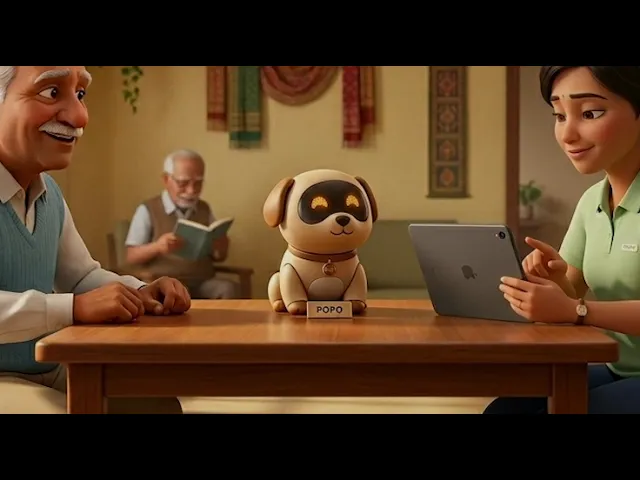
POPO is a service concept designed to create meaningful interactions between people and animals by connecting different stakeholders involved in the experience.
The project explored the complete ecosystem rather than designing a single application.
System Design
Project Overview
Research
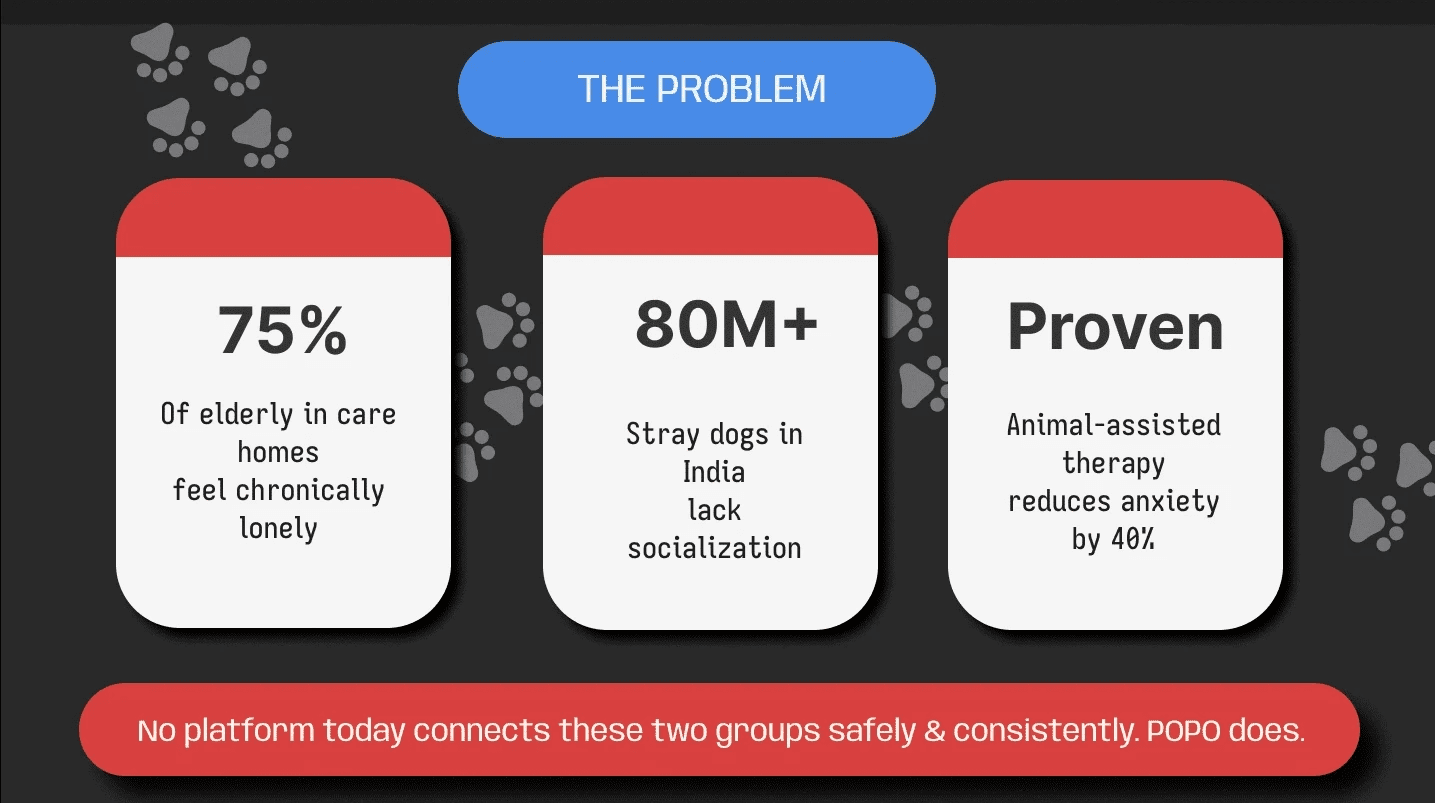
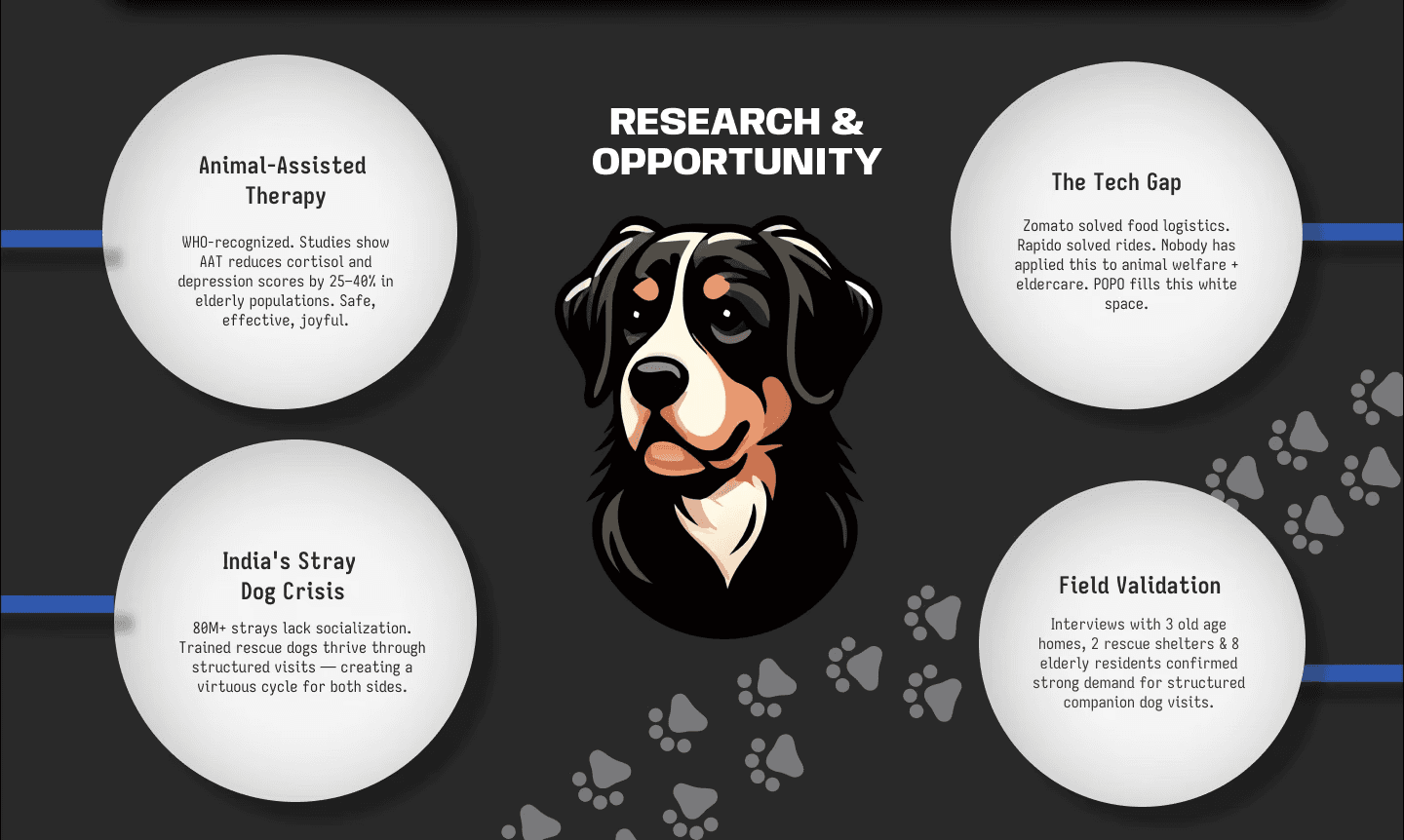
Because POPO is a multi-stakeholder service, our research focused on understanding the ecosystem.
We explored:
User needs and motivations
Stakeholder responsibilities
Existing service gaps
Communication between stakeholders
Scheduling and coordination
Personality/compatibility matching
How the physical IoT device could support the service
How different users would interact with the system
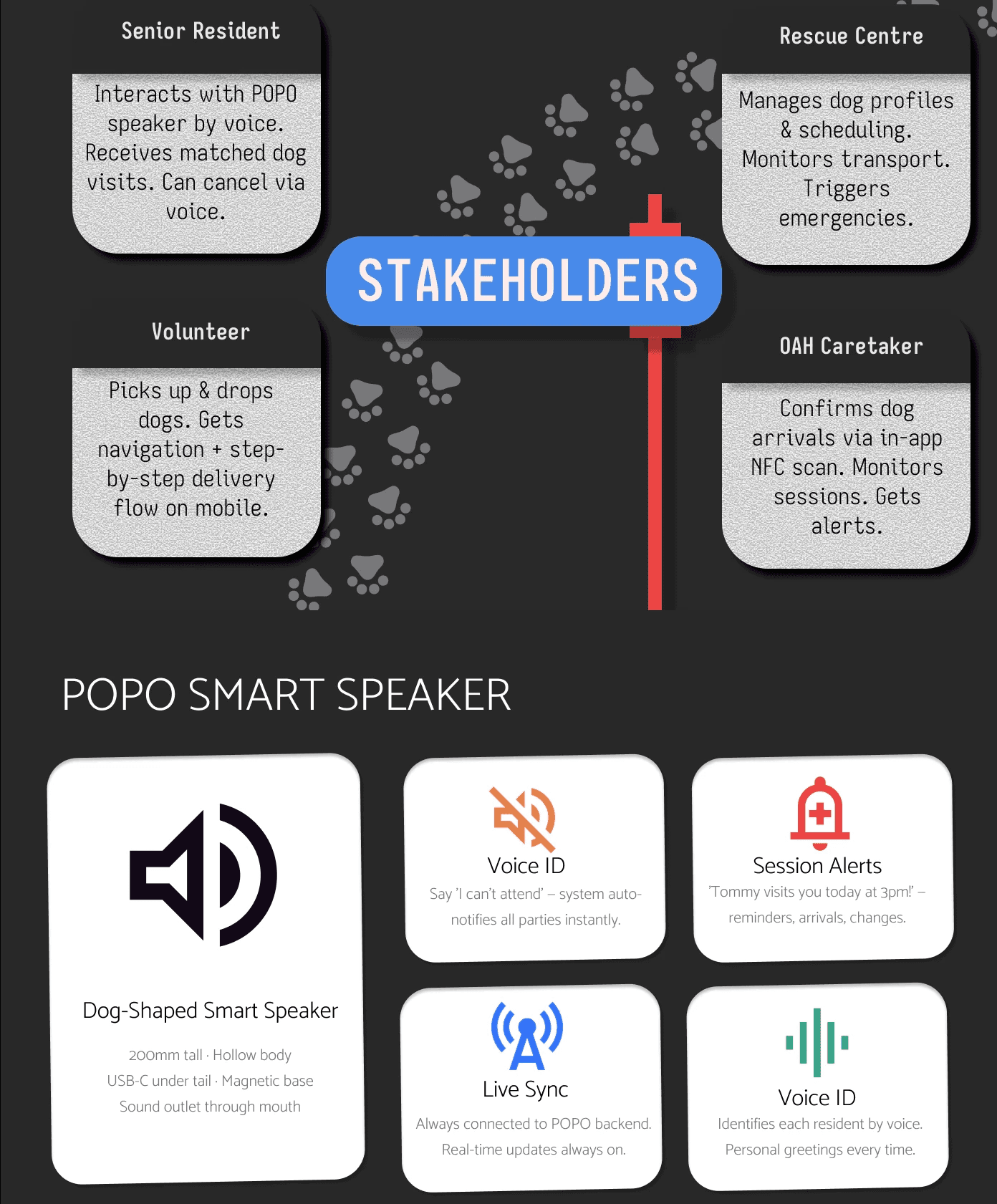
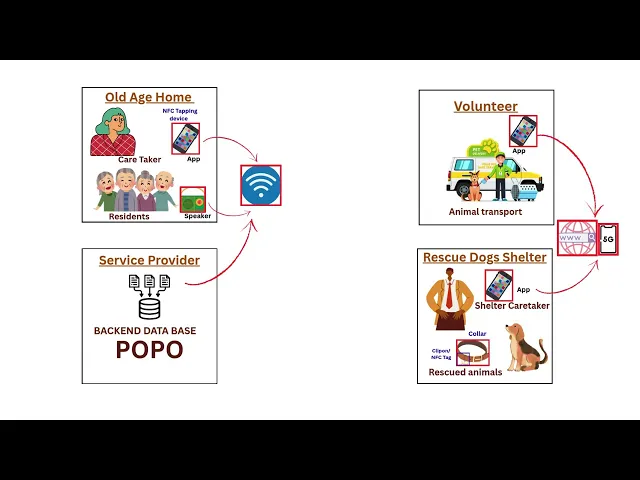
Stakeholder Mapping
One of the important parts of the project was understanding who is involved in delivering the experience.
Key stakeholders
Old Age Home Manager Manages users and coordinates participation.
Animal Shelter Manager Manages animals and coordinates shelter-side activities.
Volunteer Helps facilitate the interaction and movement between stakeholders.
Service Designer / Backend Supports the overall service infrastructure and data flow.
Participant The person experiencing the interaction with the animal.
IoT Component
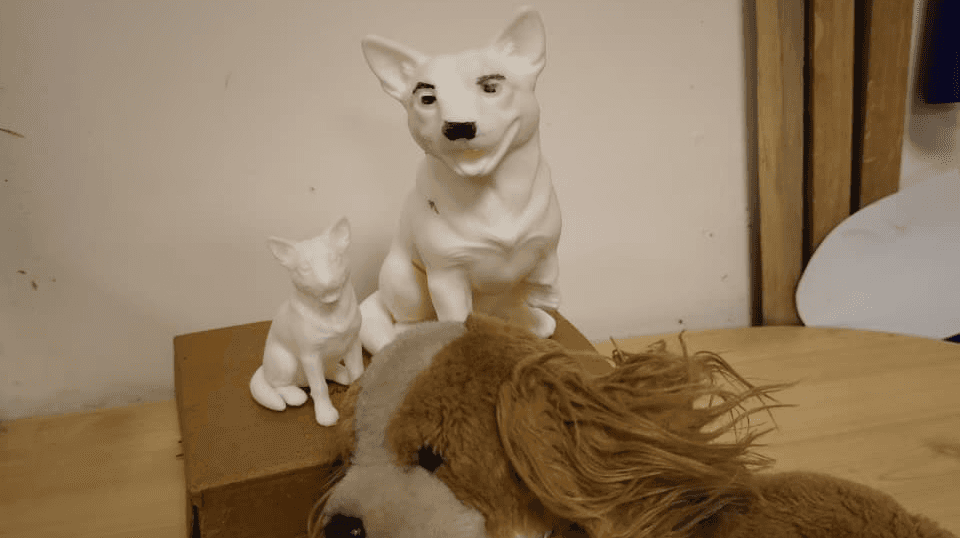
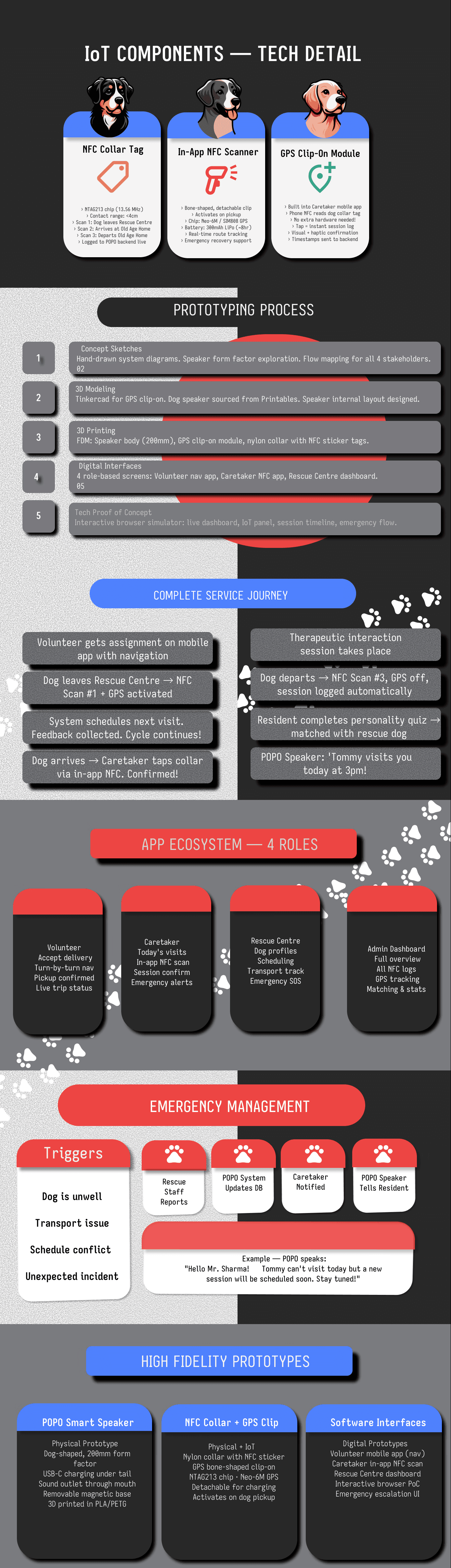
The project also explored a physical POPO device as part of the service.
Instead of making the experience completely screen-based, the device was considered as a physical touchpoint connecting the user to the service.
IoT exploration
The project explored:
Device interaction
Notifications
User communication
Service coordination
Connectivity between physical and digital touchpoints
The physical device became one part of a larger service ecosystem rather than the entire solution.
Personality Matching
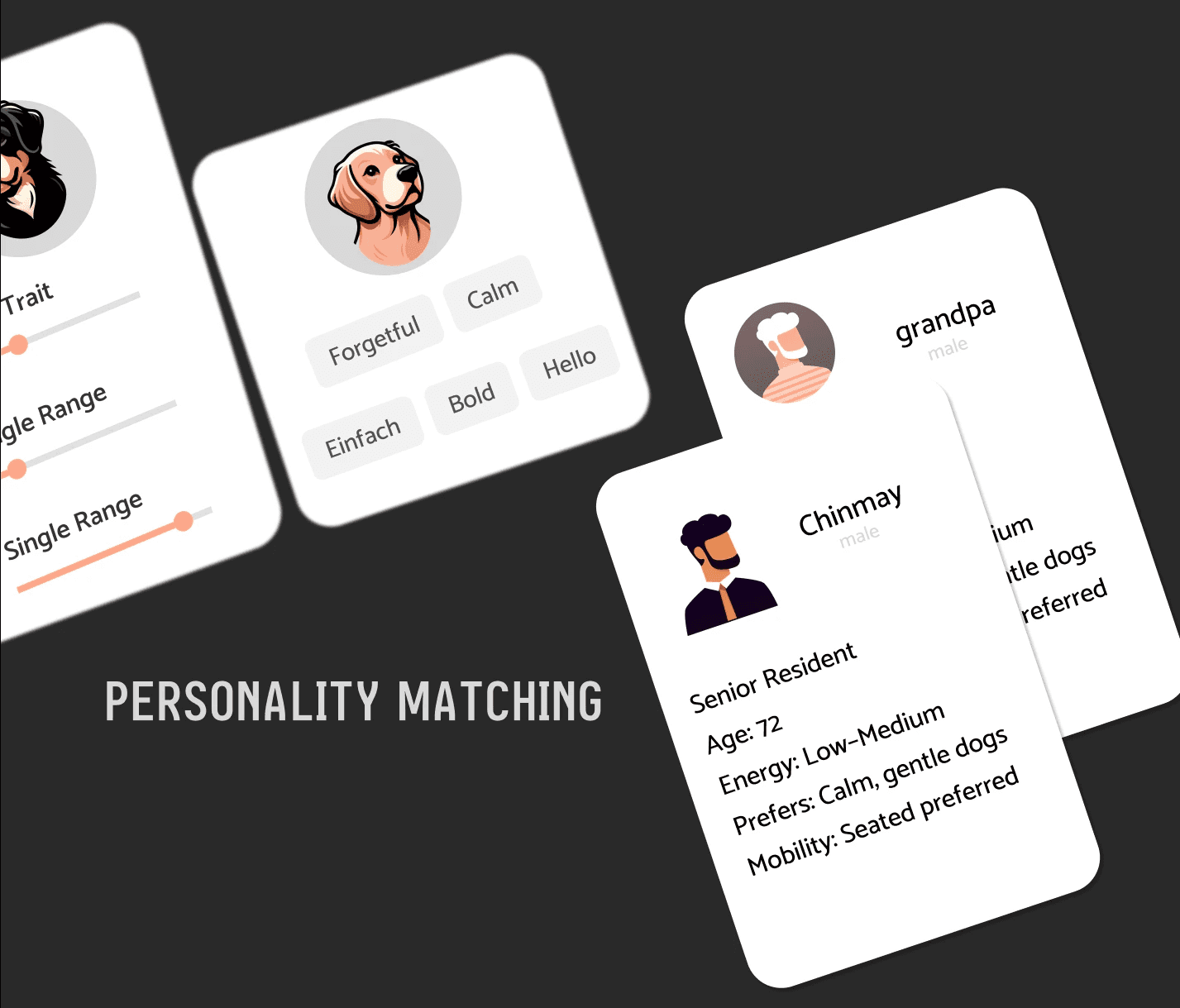
One of the interesting parts of the concept was personality matching.
Instead of treating every participant and animal interaction as the same, we explored the idea of matching based on characteristics and preferences.
Why matching?
A successful interaction depends not only on availability.
A service can be convenient for one user but difficult for another stakeholder who has to operate it.
03 — Stakeholder mapping is a research tool
Mapping responsibilities helped us identify dependencies and gaps that were not visible when looking only at the end-user experience.
04 — Matching requires understanding behaviour
The personality-matching concept showed me that successful experiences can depend on compatibility, not just functionality.
05 — Physical and digital experiences can work together
The IoT component helped me explore how physical touchpoints can complement digital interfaces.
My Contribution
I contributed to the project through UX research, stakeholder mapping, user-flow development, and service-flow exploration. I also worked on prototyping and translating research insights into interface and interaction decisions.